
ADVANCED JAVA
Advanced Java refers to an extension of the Java programming language that builds upon the fundamentals of core Java. It includes a set of powerful features and libraries designed to facilitate the development of complex and enterprise-level applications offering a wide range of tools, libraries, and frameworks to streamline development and enhance performance, security, and scalability
ADVANCED JAVA
IT Training Programme
100% placement assistance
Enquire Now
Get course fees, batch dates & a callback
What you'll learn
Programme Overview
14 sections covering the complete curriculum — a single, progressive learning arc.
Foundations & Core Concepts
Get hands-on with the fundamentals and architecture — the building blocks for everything that follows.
Hands-On Practical Training
Work through real exercises and assignments designed to mirror what you will do on the job.
Real-World Projects
Apply what you have learned to end-to-end projects that go straight into your portfolio.
Advanced Techniques
Go beyond the basics with advanced concepts, integrations and production-grade practices.
Ecosystem Integration
Understand how this technology connects with the broader tools and platforms used in the industry.
Performance & Interview Prep
Master optimization techniques and prepare for the technical interview questions employers actually ask.
Who is this programme for?
Whether you're already writing code, working with data, or supporting applications today — this programme is built to take you into a Programming Languages role.
Software Developers
Engineers who want to add this skill set to their toolkit
Analysts & Consultants
Professionals moving into a more technical, hands-on role
IT Professionals
System admins and support engineers upskilling into a new domain
Fresh Graduates
CS/IT graduates aiming for a job-ready technical role
Course Curriculum
14 sections • 40 lessons • 50 hours
Jump to Section
Total Duration
50 hours
100% Practical · Unlimited Doubt Sessions
01 Module 1: Advanced Object-Oriented Programming
02 Module 2: Java Collections Framework
03 Module 3: Exception Handling and Logging
04 Module 4: Multithreading and Concurrency
05 Module 5: Java I/O and NIO
06 Module 6: Networking and Socket Programming
07 Module 7: Java Database Connectivity (JDBC)
08 Module 8: Java EE (Enterprise Edition) Technologies
09 Module 9: Spring Framework
10 Module 10: Hibernate
11 Module 11: Web Services
12 Module 12: Design Patterns
13 Module 13: Advanced Topics
14 Module 14: Project Work
Tools & Technologies
Every tool listed here is installed, configured and used in a hands-on lab session.
Hands-On Labs
Practical Environment
Industry-Standard Tools
Real-World Setup
Guided Exercises
Skill Building
Sample Datasets
Practice Material
Mini Projects
Applied Practice
Assignments
Mentor Reviewed
Doubt Sessions
Live Support
Resume Building
Career Support
Mock Interviews
Interview Prep
Certification Prep
Global Recognition
Production Practices
Real-World Ready
Best Practices
Industry Standards
You don't just learn ADVANCED JAVA. You ship it.
Three major projects, each mirroring how production teams actually work — from guided foundations to a portfolio-ready capstone.
Guided Foundation Project
→Requirement Analysis
→Guided Implementation
→Mentor Review
→Iteration
Apply the fundamentals in a structured, mentor-reviewed project
Take the core concepts from the first half of the curriculum and apply them to a realistic scenario, with guidance and feedback from your mentor at every step.
Applied Practice Project
→Scenario Design
→Independent Build
→Testing & Validation
→Peer Review
Build a more independent project mirroring real production scenarios
Work through a project that combines multiple concepts from the curriculum, closer to how work is actually structured on the job — less hand-holding, more ownership.
Capstone Project
→Planning
→End-to-End Build
→Review & Refinement
→Presentation
Take a project from requirements to a polished, portfolio-ready deliverable
Your final project — plan, build, test and present a complete solution using everything covered in the curriculum, reviewed by mentors before you graduate.
All 3 projects go directly into your portfolio & resume — reviewed by mentors before you graduate.
See Sample Project ReportsUpcoming Batches
Why Radical Technologies
- Highly practical oriented training
- Installation support on your system
- 24/7 Email and Phone support
- 100% Placement Assistance
- Global Certification Preparation
- Trainer-Student Interactive Portal
- Assignments and Projects by Mentors
- Weekend / Weekdays / Morning / Evening batches
- 80:20 Practical and Theory ratio
- Real-life Case Studies
- Easy make-up for missed sessions
- PSI | Kryterion | Redhat Test Centers
- Lifetime Video Classroom Access (coming soon)
- Resume Prep and Mock Interviews
- Learn 300+ courses at your own time
- 50,000+ Satisfied Learners
- Course Completion Certificate
- Practical Labs available
- Mentor Support available
- Doubt Clearing Session available
- 10% Discounted Global Certification
Like the Curriculum? Let's Get Started
Join 50,000+ students already enrolled at Radical Technologies
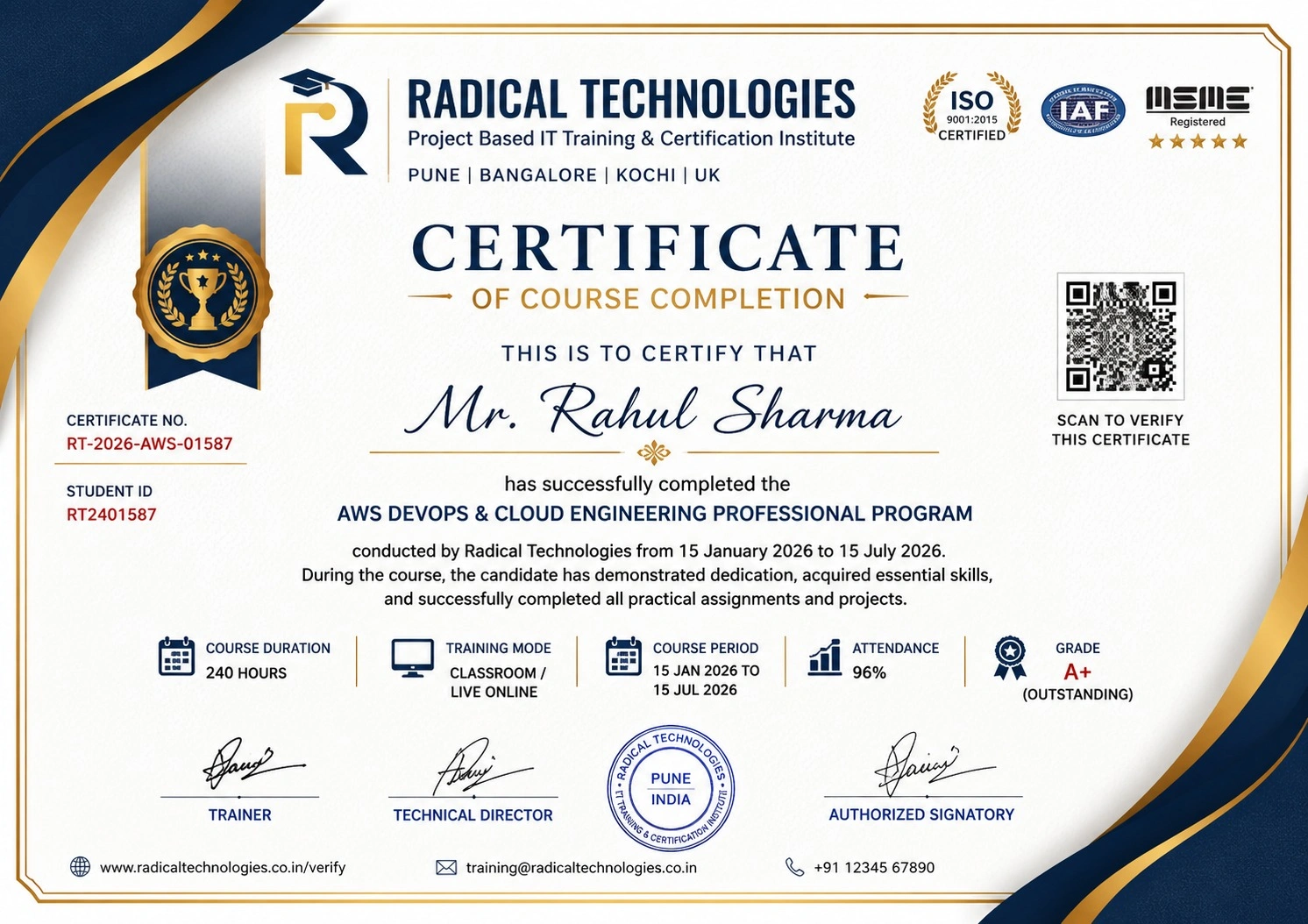
Global Certification
Radical Technologies is the leading IT certification institute in Pune, offering globally recognized certifications across various domains. With expert trainers and comprehensive materials, we ensure students gain in-depth knowledge and hands-on experience to excel in their careers. Our certification programs are tailored to meet industry standards — from cloud technologies to data science — empowering individuals to stay ahead in the ever-evolving tech landscape.
Career Services
At Radical Technologies, we are committed to your success beyond the classroom. Our 100% Job Assistance program ensures that you are not only equipped with industry-relevant skills but also guided through the job placement process. With personalised resume building, interview preparation, and access to our extensive network of hiring partners, we help you take the next step confidently into your IT career.
Career Support
Join our Brush-up Session & get support until you find a job!
Get StartedRadical Learning Eco-System
Exam Simulator
Cloud SandBox
Hands-on Cloud Lab
Developer Coding Ground
Student Reviews
Course Rating
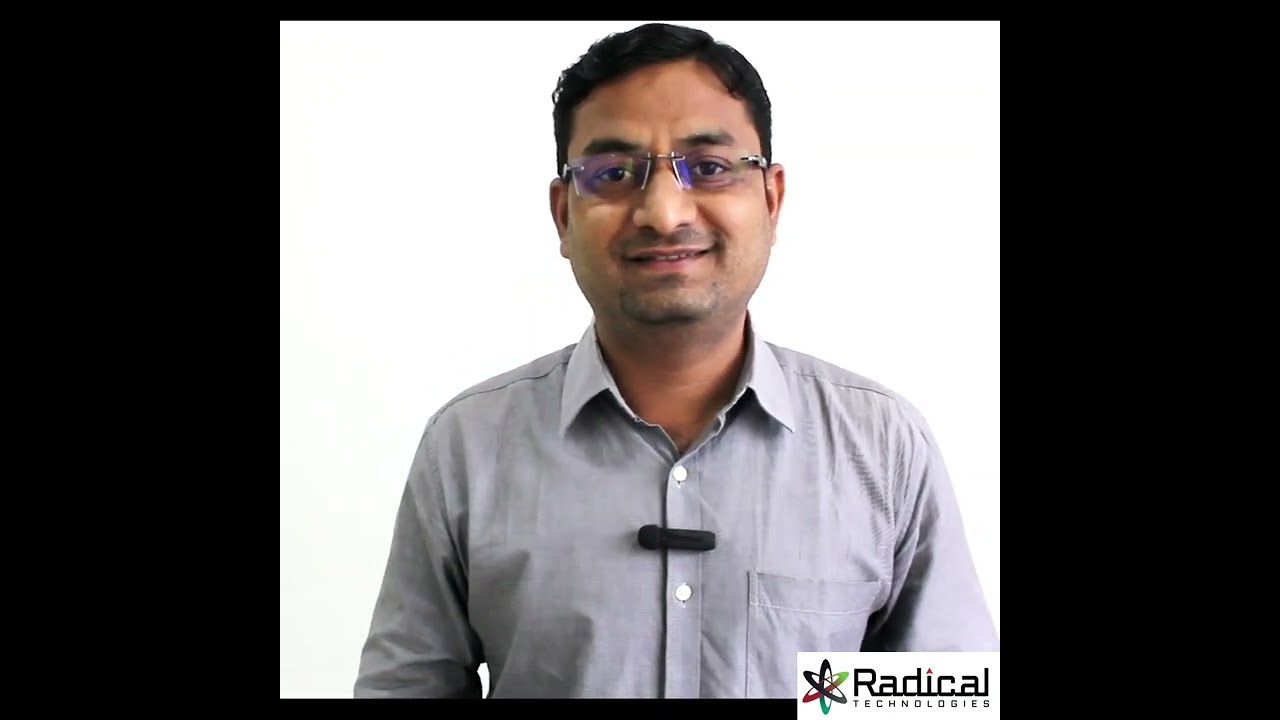
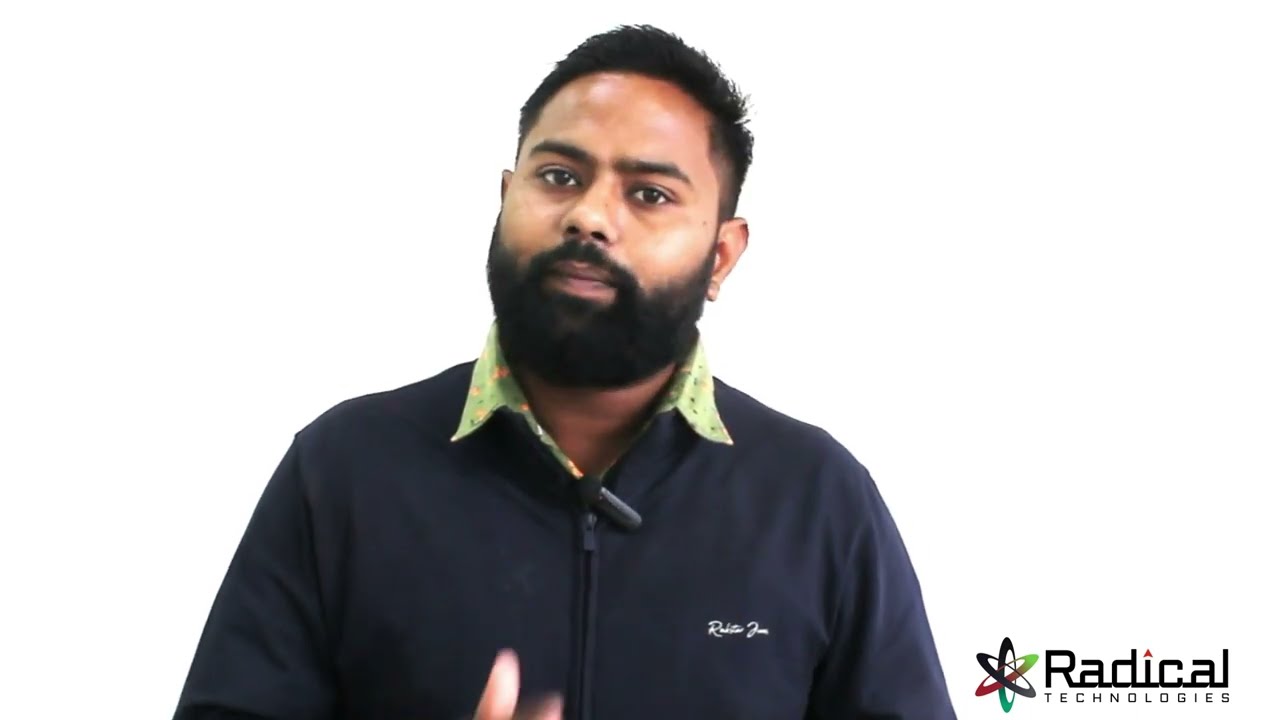
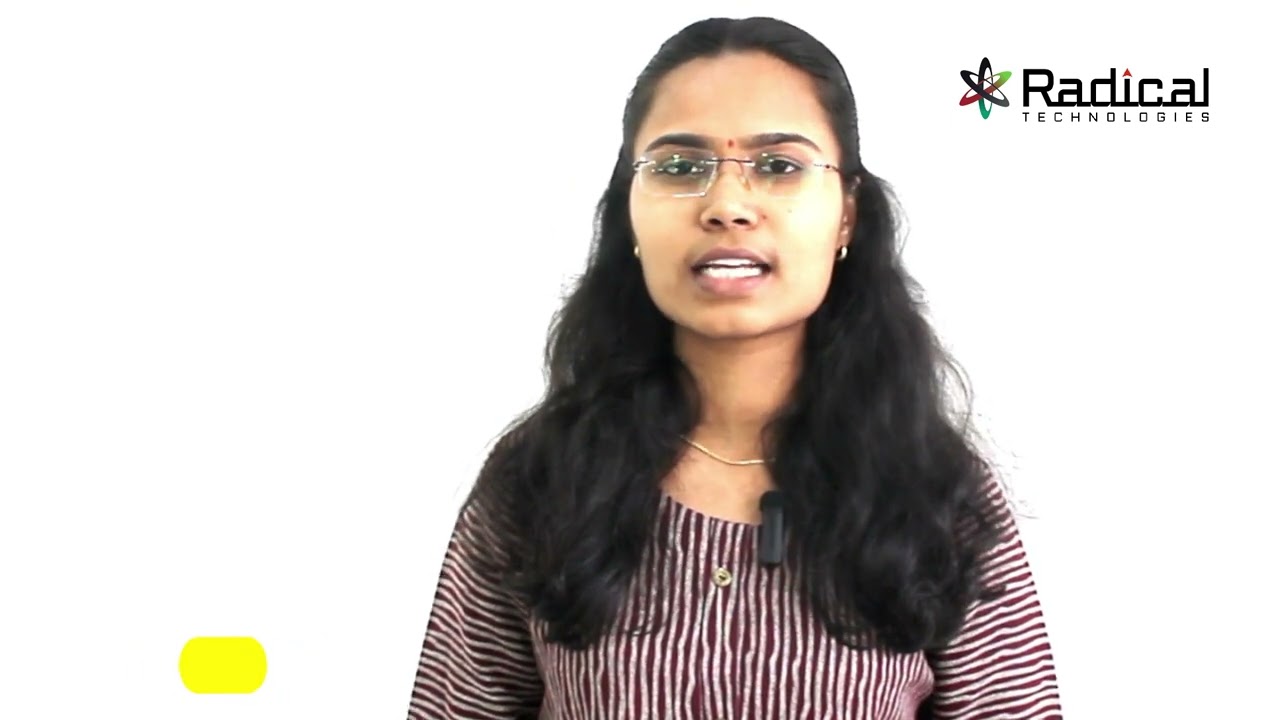
The Advanced Java Training in Bengaluru at Radical Technologies helped me land a great job. The course gave me a solid foundation in Java programming and prepared me for industry challenges.
Radical Technologies is the best Advanced Java Institute in Bengaluru. The course structure, expert instructors, and hands-on practice made me proficient in Java in no time.
I attended Advanced Java Classes in Bengaluru at Radical Technologies and was impressed by the high-quality instruction and course materials. It’s one of the best institutes for Java training.
The Advanced Java Certification in Bengaluru gave me the credentials I needed to further my career. I feel confident applying my skills in Java development after completing this training.
Radical Technologies' Advanced Java Course in Bengaluru helped me understand advanced concepts like RESTful APIs, Hibernate, and Spring. It’s one of the best learning experiences I’ve had.
The Advanced Java Online Certification in Bengaluru provided by Radical Technologies is a great way to validate your skills. I learned a lot about Java frameworks and database management during the course.
After completing the Advanced Java Online Training in Bengaluru, I gained the confidence to handle complex Java projects. The course helped me improve my problem-solving skills.
I opted for the Advanced Java Online Course in Bengaluru and was impressed with the content and the interactive sessions. The instructors went the extra mile to ensure every concept was well understood.
The Advanced Java Online Classes in Bengaluru helped me gain a thorough understanding of Java programming at my own pace. The flexibility of online learning is perfect for anyone with a busy schedule.
Radical Technologies offers outstanding Advanced Java Corporate Training in Bengaluru. The practical approach and problem-solving sessions ensured that I learned Java development techniques quickly.
The Advanced Java Training in Bengaluru provided by Radical Technologies is one of the best. The course structure was easy to follow, and the trainers provided great real-life examples to explain key concepts.
At Radical Technologies, the Advanced Java Institute in Bengaluru helped me improve my coding skills significantly. The trainers were very experienced, and the course material was updated with the latest trends in Java.
The Advanced Java Classes in Bengaluru were fantastic! I gained a deeper understanding of object-oriented programming and advanced Java techniques that I can now apply in my job.
I highly recommend Radical Technologies for anyone seeking Advanced Java Certification in Bengaluru. The hands-on approach made it easy for me to transition from theory to practical implementation.
Radical Technologies’ Advanced Java Course in Bengaluru provided me with comprehensive knowledge of Java frameworks and APIs. I now feel ready to tackle real-world Java development challenges.
After completing the Advanced Java Online Certification in Bengaluru with Radical Technologies, I feel more confident in my Java programming skills. This course was a game-changer for my career.
The Advanced Java Online Training in Bengaluru exceeded my expectations. The instructors explained complex concepts with clarity, and the live coding sessions helped me implement Java applications on my own.
Radical Technologies’ Advanced Java Online Course in Bengaluru is highly recommended for anyone looking to boost their Java skills. The instructors are highly knowledgeable, and the course materials are well-structured.
I opted for the Advanced Java Online Classes in Bengaluru, and the experience was exceptional. The flexibility of online learning combined with the quality of content made this course worth every penny.
The Advanced Java Corporate Training in Bengaluru provided by Radical Technologies was top-notch. It was tailored to meet the needs of our team, and the trainers ensured that we got the most out of the course.
Radical Technologies offers the best Advanced Java Training in Bengaluru. The interactive sessions and personalized attention helped me understand advanced Java topics like multi-threading and database connectivity in depth.
As a professional seeking to enhance my skills, I found the Advanced Java Institute in Bengaluru to be the perfect place for growth. The courses are structured in a way that makes learning both challenging and rewarding.
The Advanced Java Classes in Bengaluru at Radical Technologies were incredibly informative. The instructors made the most complex concepts easy to understand, and the real-time coding practices were extremely helpful.
Thanks to the Advanced Java Certification in Bengaluru from Radical Technologies, I was able to advance my career. The practical sessions were invaluable, and I gained hands-on experience in real-world Java projects.
I enrolled in the Advanced Java Course in Bengaluru at Radical Technologies and was thoroughly impressed with the depth of knowledge provided. The course content covered all essential topics and helped me gain confidence in working on complex Java applications.



Frequently Asked Questions
15 questions about the ADVANCED JAVA course.
01 What is Advanced Java, and how is it different from Core Java?
02 What are Java Servlets, and how do they work?
03 What is the role of JavaServer Pages (JSP) in web development?
04 How does JDBC (Java Database Connectivity) work in Advanced Java?
05 What are Enterprise JavaBeans (EJB), and when should you use them?
06 Can you explain Dependency Injection in the Spring Framework?
07 What is Hibernate, and how does it simplify database interactions?
08 What is the significance of Java RMI (Remote Method Invocation)?
09 What are the advantages of using Spring Boot in Advanced Java development?
10 How does Java handle multi-threading, and what challenges arise with it?
11 What are the differences between ArrayList and LinkedList in Java?
12 What is the significance of the final keyword in Java?
13 What is the Java Collections Framework, and why is it important?
14 How does Java handle garbage collection, and what is its purpose?
15 What are the differences between Callable and Runnable interfaces in Java?
ADVANCED JAVA Interview Questions
10 questions commonly asked in ADVANCED JAVA interviews.
- 01 How would you handle transaction management in a Java application that uses multiple databases or services?
- 02 What is the Spring Framework, and how does it support Dependency Injection and Aspect-Oriented Programming in Java applications?
- 03 Can you describe the architecture of an Enterprise JavaBean (EJB) and how it facilitates the development of scalable enterprise applications?
- 04 Explain the role of the Java Persistence API (JPA) in managing database operations in Java. How does it differ from JDBC?
- 05 What are the key differences between a Servlet and a JSP in Java, and when would you use one over the other?
- 06 What is a Callable interface in Java, and how does it differ from a Runnable interface in terms of concurrency and thread execution?What is a Callable interface in Java, and how does it differ from a Runnable interface in terms of concurrency and thread execution?
- 07 How does Java handle multi-threading, and what are some of the challenges developers face when working with multi-threaded applications?
- 08 Explain how the Java Collections Framework works. What are the key differences between ArrayList and LinkedList in terms of performance and use cases?
- 09 What are the benefits of using Java's RMI (Remote Method Invocation) in distributed computing applications? Can you explain its limitations?
- 10 In Java, what is the significance of the final keyword when applied to variables, methods, and classes?
Advanced Java Course Certification with Training in Pune
Radical Technologies is the leading institute in Bangalore for Advanced Java Course Training, offering world-class education to students and professionals seeking to advance their Java programming skills. With years of experience in the field, we specialize in providing top-tier Advanced Java Training in Bengaluru, tailored to meet the needs of individuals and organizations.
Our Advanced Java Course in Bengaluru is designed to help learners master advanced concepts such as Servlets, JSP, JDBC, multi-threading, Spring Framework, Hibernate, and much more. Whether you’re a beginner or an experienced developer looking to upgrade your skills, our comprehensive curriculum covers all key topics to help you succeed in Java development.
We offer Advanced Java Certification in Bengaluru, providing students with a recognized certification upon course completion, ensuring they are equipped with the knowledge and skills required to excel in the competitive job market. Our Advanced Java Classes in Bengaluru are conducted by industry experts with practical experience, offering hands-on training and real-time project work.
As the leading Advanced Java Institute in Bengaluru, we understand the unique needs of our students and provide personalized attention to ensure that each individual can effectively grasp complex Java concepts. Our flexible Advanced Java Online Classes in Bengaluru also cater to those who prefer to learn at their own pace, providing the same high-quality content in an online format.
For companies looking to upskill their teams, we offer Advanced Java Corporate Training in Bengaluru, customized to address specific business requirements and technology needs. Our Advanced Java Online Training in Bengaluru is designed for working professionals and students who prefer the convenience of online learning, with interactive sessions and live instructor-led classes.
With a commitment to excellence, Radical Technologies is your go-to destination for Advanced Java Online Course in Bengaluru, Advanced Java Online Certification in Bengaluru, and more. Join us today to take the next step in your Java career and gain the expertise needed to work on cutting-edge Java technologies.
Our Alumni Work At




















Related Courses

ADVANCED JAVA Course In Other Cities
Online Batches Available For These Areas
Ambegaon Budruk | Aundh | Baner | Bavdhan Khurd | Bavdhan Budruk | Balewadi | Shivajinagar | Bibvewadi | Bhugaon | Bhukum | Dhankawadi | Dhanori | Dhayari | Erandwane | Fursungi | Ghorpadi | Hadapsar | Hingne Khurd | Karve Nagar | Kalas | Katraj | Khadki | Kharadi | Kondhwa | Koregaon Park | Kothrud | Lohagaon | Manjri | Markal | Mohammed Wadi | Mundhwa | Nanded | Parvati Hill | Panmala | Pashan | Pirangut | Shivane | Sus | Undri | Vishrantwadi | Vitthalwadi | Vadgaon Khurd | Vadgaon Budruk | Vadgaon Sheri | Wagholi | Wanwadi | Warje | Yerwada | Akurdi | Bhosari | Chakan | Charholi Budruk | Chikhli | Chimbali | Chinchwad | Dapodi | Dehu Road | Dighi | Dudulgaon | Hinjawadi | Kalewadi | Kasarwadi | Maan | Moshi | Phugewadi | Pimple Gurav | Pimple Nilakh | Pimple Saudagar | Pimpri | Ravet | Rahatani | Sangvi | Talawade | Tathawade | Thergaon | Wakad
ADVANCED JAVA
IT Training Programme
100% placement assistance